Creativity and your Surroundings

I’ve always loved this Lord Leighton painting Flaming June, dating from 1995. When you see it large on the wall it is just so lush and intimate, it just about takes your breath away.

(I’m the sort of person who can go to the art gallery, wander around for a couple of hours and come out feeling like I’m floating on air, there’s so many endorphins swimming around in my body).

I’m going to reward myself by buying a poster of Flaming June and getting it framed. I almost bought it 10 years ago but felt it was too much of an indulgence.

Here I have to confess that I love beautiful things.I always have. As a child I used to collect beautiful moments so I could take them out and think about them again at a later date. I thought everyone did this.

I found school depressing because the classrooms were so ugly and utilitarian. I grew up in Southport on the Gold Coast. In those days it was fibro beach shacks built on scrubby bushland.  I ached for beautiful things.

Here is a link to Dr Alice Boyes, a clinnical psychologist who believes how we feel affects our creativity. She says when we feel positive, we are more creative.

‘In an evolutionary sense, negative emotions like fear are designed to make us focus narrowly on a threat (e.g. is that moving thing a snake?). Positive emotions like feeling happy or upbeat are designed to make us want to explore, try new things, learn new information, and build relationships with other people.’

Which makes sense because to be creative we need to be open and let our mind make those lateral leaps that you just can’t produce by pushing for them. What makes you feel creative?

Leave a Comment

Filed under creativity, Fun Stuff, Nourish the Writer

A Salute to Female Writers of the 70s

Recently I came across an interesting phenomenon. Young women of today (educated, professional young women) find feminism a bit passe. ‘What’s all the fuss about?’.

I was there in the 70s  when the books written by female SF writers were being published.

In the 70s I had a bookshop where I sat and read all day. I’d read a book before lunch, a book after lunch and a book after dinner. It was heaven. Amongst the authors I discovered were  Joanna Russ, Vonda McIntyre, Ursula K Le Guin and Doris Lessing.

This was back in the days before the web and you could hardly discover anything about writers. I never knew that Russ had won both the Hugo and the Nebula, I just liked her books. When I discovered Joanna Russ, I read everything of hers that I could find. I can still remember scenes from her books 30 years later. Her characters were so different, they resonated with me. Now I can google her bio to learn about her. Her wry sens of humour came through her writing. Here’s a great quote from her on ‘How to Suppress Women’s Writing.

“She didn’t write it. She wrote it but she shouldn’t have. She wrote it but look what she wrote about. She wrote it but she isn’t really an artist, and it isn’t really art. She wrote it but she had help. She wrote it but she’s an anomaly. She wrote it BUT…”

And here’s a review of ‘How to Suppress Women’s Writing’.

Then there’s Ursula K Le Guin, much has been written about her work.  In 1969 when Le Guin wrote Left Hand of Darkness it won the Hugo and the Nebula. See here for some background info. (And here is a study guide for the book. Don’t you love the web?). When I read ‘Left Hand of Darkness’ I had no trouble identifying with the  non-gendered aliens. But the first time I read it I didn’t notice  that Le Guin had used  the male pronoun for these aliens. This book is all about gender and perception, yet  she used ‘he’ as the generic pronoun. When asked years later, Le Guin said she had used ‘he’ as a default. (I came across this quote while researching for my MA, and don’t know where the reference is now). But since then …

‘Le Guin has written essays since about the assumptions she made in writing the book. She’s also written the story “The Winter King” where she uses “she” as the pronoun for all Gethenians, rather than “he” as she does in the book (The Left Hand of Darkness), and the story “Coming of Age in Karhide.” Both of these explicitly feminise the Gethenians. They’re interesting, as are her writings about the book, but they’re afterthoughts from a different world.’

It is amazing how the perception of the character changes if you believe the narrator to be male or female. I once read a whole short story where no gender specific pronouns were used. (No ‘he’ or ‘she’). It made for some challenging grammar.The author used non-gender specific names and I found my perception of whether the character was male or female changed depending on whether they were being active or passive. The author was making a point about our perceptions as readers. (This story was also published in the 70s, when feminism was pushing boundaries).

Vonda McIntyre came out to Australia for a convention in the late 70s. (Can’t remember which one). I read her book ‘Dreamsnake’ . It won both a Hugo and Nebula. One line made me realise how gender blinkered I was by my upbringing. We are all products of our time. We don’t see it how blinkered we are unless writers and artists hold a mirror to us. SF and Fantasy create their own worlds, so they can hold a slightly distorted mirror that can surprise us with its insights.

In 2007 Lessing was awarded the Noble Prize for Literature. With Doris Lessing I must have discovered her in the brief period that she was writing Fantasy and SF. It is all a bit fuzzy now, but what stands out in my mind is the humanity of her writing.

All these years later, I’m taking my hat off to those writers. Thank you, Ladies.

It is because of people like you that feminism can seem passe.

What writers have impressed you with their insights?
4 Comments

Filed under Fantasy books, Nourish the Writer, SF Books, The Writing Fraternity, Writing craft

Things you can’t forget

I live an ordinary life, in a safe ordinary suburb. I know when I go to sleep at night that, barring freak accidents, I’ll wake up safe in my bed.  But I’m always looking out at the world to find interesting facts about people and places and for interesting visuals to stimulate ideas. (To be honest, I’m just insatiably curious about everything).

I came across this web site. The photos are  real  (not computer generated). People used to live here. The picture of the piano keys is from this site.

Another place that is absolutely fascinating is Chernobyl.  Here is a link to a series of photos on the BBC site. I saw one documentary with a shot of  a sapling growing through the floor of an indoor basket ball court.

What visuals have you seen that you can’t forget.

Leave a Comment

Filed under creativity, Nourish the Writer

More Cross Pollination

Having offered to do a bookplate for Tansy, I had to offer to do a book plate for Trent.

Death most Definite’  is the first of Trent Jamieson’s three books to be published by Orbit in the Death Works series.  Like Tansy’s series, I feel particularly proud of book one because we critiqued the manuscript at the last ROR. Meanwhile, Trent’s editor was taking it to an acquisitions meeting to see if Orbit would buy it. Everytime Trent’s mobile rang we thought it might be his editor reporting in. So you can imagine how exciting that was.

Trent’s series is also urban fantasy but very different from Tansy’s. Set in a Brisbane and south East Queensland, much like the one we know, only Death is a business and, what with corporate take overs and mergers, it can be dangerous. Steve is just a lowly employee, whose job it is to help the recently departed through to the after life, when he gets involved in a take over.

I have to admire the way Trent handles drama, death and danger with his trademark certain dry  humour. Seems like everyone is writing DUF ( Dark Urban Fantasy). It’s accessible. It’s fun.

I can recommend both Trent and Tansy’s books. What have you read in this genre recently that you’d recommend?

Leave a Comment

Filed under Genre, Promoting Friend's Books, Publishing Industry, The Writing Fraternity

Cross Bookplate Pollination!

What is Cross Bookplate Pollination?

I’m glad you asked. It is when I create bookplate for my dear friends and then blog about it.

This one is for Tansy, whose Power and Majesty, book one of Creature Court has just been released. You can read about her launch here. And you can hear podcasts from the book here. Go Tansy.

If you like  Dark Urban Fantasy with a twist, in this case 1920s style combined with Roman festivals and sexy naked men falling from the sky, you’ll like Tansy’s new series.

Having read book one at the last ROR, I’m looking forward to reading book two!

Tomorrow I’ll give you a glimpse of the bookplate I did for Trent’s new series.

Leave a Comment

Filed under Fun Stuff, Nourish the Writer, Promoting Friend's Books, The Writing Fraternity

Interested in Writing for Computer Games?

In my other life I teach at a computer games college and one of teachers writes story for games. In this post they talk about the challenge of incorporating story into games.  They discusses when to bring a writer into the development of a game and what they can achieve.

‘This may not be a surprise to any of you.  I’ve worked in games for so long that writing only using dialogue seems natural, as I’m usually asked to wrap things up once the game is content-complete.  That means there’s no provision for a little extra asset that would make all the difference and save a tonne of dialogue.’

Writing for games, anyone interested?

2 Comments

Filed under Writing for computer games

Doing the Happy Dance!

Advance copies of book one of King Rolen’s Kin have arrived.  This is the moment when writers call their family members and proudly open the box from the publisher, so everyone can Ooh and Ahh.

Now I’m madly sending out copies to those people who helped me along the way to publication.

Of course not all family members were impressed.

Sassy cat had to investigate to see if this was a good place to sleep!

6 Comments

Filed under Fun Stuff, Nourish the Writer, The Writing Fraternity

Writers and time management

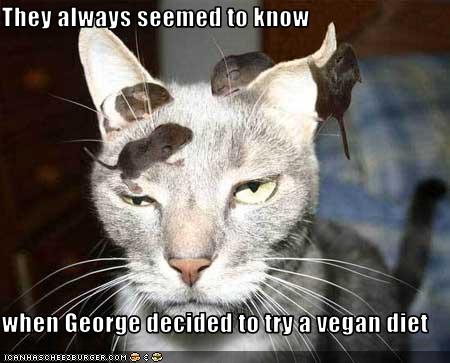
One of my writing friends asked for a writing craft blog post about how not to waste time surfing the net and reading blogs when you should be writing. While being aware of the irony of this, I got into the spirit and confessed to having a LOL Cat addiction.

I actually think LOL cats is evidence that the world is not a terrible place. The news gives us this skewed view of the world full of disasters and politics and sport. But there are all these people out there taking pictures of their pets and coming up with funny captions, which proves that the world is not all death and disaster.

Here’s one that I just love. I think you have to be a cat person to really appreciate it.

Having been way too over committed recently, I thought  others could learn from my mistakes. So I gave the ‘writer and time management thing’ some thought, and did a post over at the ROR blog on the topic.

2 Comments

Filed under creativity, Fun Stuff, Nourish the Writer, The Writing Fraternity, Writing craft

When Publishers get it Wrong …

Publishers are only human and often the ‘gate keeper’ is a young person just out of UNI having done a Lit Degree. The submissions mount up and things get rejected …
Frank Herbert’s Dune was rejected 20 times before becoming one of the most beloved science fiction novels of all time. It has since sold over 12 million copies.
JK Rowling’s first Harry Potter book was rejected by a dozen publishers until Bloomsbury bought it, on the recommendation of the CEO’s eight year old daughter. I wonder if she is working for him now.
Would you believe Jasper Fforde recived 76 rejections before his first book, The Eyre Affair was accepted. I saw him at the Brisbane Writers Festival and he said, somewhat plaintively, ‘Puns used to be considered the highest form of wit.’ This will make you smile if you’ve read his books.
A publisher rejected Wind in the Willows because, as they told Kenneth Grahame, it was ‘an irresponsible holiday story’.
Who had to read Lord of the Flies for high school English? William Golding’s book was rejected by 20 publishers. One described it as ‘an absurd and uninteresting fantasy which was rubbish and dull’. This book has since sold more than 25 million copies in English alone. (Many of which were bought by students who had to study it. I suspect it is wasted on teenagers. You don’t get the true horror of it until you are much older).
And then there is the wonderful Ursula K Le Guin. Her book The Left hand of Darkness won both a Hugo and the Nebula. One publisher said:

‘The book is so endlessly complicated by details of reference and information, the interim legends become so much of a nuisance despite their relevance, that the very action of the story seems to be to become hopelessly bogged down and the book, eventually, unreadable. The whole is so dry and airless, so lacking in pace, that whatever drama and excitement the novel might have had is entirely dissipated by what does seem, a great deal of the time, to be extraneous material. My thanks nonetheless for having thought of us. The manuscript of The Left Hand of Darkness is returned herewith.’

So there you have it. What would have happened if these authors had let rejection stop them? Take heart. Many books that are publishable will be rejected. Some of my children’s books have been rejected 5 times before being accepted. It is simply a matter of rewriting and resubmitting until you hit the Right Editor, with the Right Book at the Right Time.

Leave a Comment

Filed under Fun Stuff, Publishing Industry, The Writing Fraternity

This one’s for Fletcher

If you are a young writer who is looking for feedback on your work, showing your parents and friends is all very well but, unless they are writers,  they won’t be able to give you the feedback you need to help you develop as a writer.

If you are serious about your writing craft, then join a local writing group. Look for one that specialises in your genre. If you’re writing speculative fiction (fantasy, SF and horror) then Visions Writers is great. They have an on-line group for everyone and meet in person in Brisbane city, so that’s handy if you live in South East Queensland. Grace Dugan joined the Vision group when she was 15 and went on to be published by Penguin.

The Queensland Writers Centre run a Young Adult Master Class series, specifically aimed at high school students who want to develop their writing skills.

It is also great to have goals and submitting to a competition is a good way to get motivated to finish the story. Who knows you might win or get noticed by the judges who are often editors. So there is the Somerset College novella competition. On the Ipswich Literary Festival site there is a list of writing competitions for people under 18. There is also the Voices on the Coast Literary Festival, which has competitions, although theirs is closed for this year.

And there are markets in Australia for spec Fic short stories. ASIM is a regular magazine which has a good turn around time for submissions. Here’s the guidelines. And here is the Specusphere web zine. And here is Inspillers which lists current markets, competitions, magazines

Here’s an Australian Spec Fic site with lots of news  and reviews. If you want to know what’s doing well in Australia by Australian authors in this genre, take a look at the Aurealis Awards page.

And if you are interested in the craft of writing the ROR site run a writing craft post every Sunday, just put in requests. The latest one was on agents.

Lastly, if you are keen to write, talk to your school or local library about bringing a published author in to run workshops. The Redlands libraries have had me run three workshops in the last month, How to write a Book Proposal, Writing Dark Urban Fantasy and Pitching your Book.

Writers are a friendly supportive bunch. We are all united by a passion for writing and our love of the genre.  Feel free to ask questions.

2 Comments

Filed under Nourish the Writer, Publishing Industry, The Writing Fraternity, Workshop/s, Writing craft