Category Archives: Writing craft

Just had to share this…

My son sent me this and I just had to share it:

I don’t know who produced it- looks like a college for creative students, the writing is too small – but I’d like to thank them.

The same could be said of writing…

It starts with a love of books,

soon they’re spending time at the library and bookstores searching for favourite authors to get their fix.

Before you know it, a simple love of books turns into…

scribbling poetry when no one’s looking and…

then their first short story. Some skip this stage and go straight to…

books. The worst genre is Fantasy. Writers have been known to create whole series of books set in secondary worlds.

Completely divorced from reality, these poor writers say their characters take over and refuse to do what they’re told!

Very sad. You have been warned.

6 Comments

Filed under Australian Artists, Australian Writers, creativity, Fun Stuff, Genre, Nourish the Writer, Obscure and Interesting, Writing craft

Kate Forsyth tells us about Rapunzel…

Today we have the lovely Kate Forsyth visting us to coincide with the release of her new book Bitter Greens. There is a copy of Bitter Greens for one lucky reader. See the give-away question at the end.


Rapunzel is one of the most mysterious and enduring of all fairytales, telling the story of a young girl sold to a witch by her parents for a handful of bitter green herbs.

Most people think that the ‘Rapunzel’ story was first told by the Grimm Brothers in the early 19th century, but in fact it is a much older tale than that. There are so many ‘Maiden in the Tower’ stories in cultures all around the world that it has its own classification in the Aarne-Thompson fairytale motif index (Type 310).

The first known version is from Christian iconography with the story of Saint Barbara. She was a virtuous young girl locked in a tower by her father in the 3rd century. She was tortured for her Christian beliefs but her wounds miraculously healed overnight and when she was beheaded by her father, he was struck by lightning and killed. Most images of her show her with long, flowing, blonde hair, and in one version of the story her hair miraculously burst into flame when her father seized hold of it.

The first appearance of the motif of the ‘hair ladder’ was in a 10th century Persian tale told by Ferdowsi (932-1025 AD), in which a woman in a harem offers to lower her hair to her lover so he can climb up to her. He is afraid he might hurt her and so throws up a rope instead.

One of Rosetti's paintings because I love the Preraphaelites

The ‘hair ladder’ reappears in Petrosinella, a literary fairy tale told by a Florentine writer, Giambattista Basile and published in 1634. Basile was living in Venice at the time and so may have heard many tales brought by sailors and merchants from faraway lands. Petrosinella (Little Parsley) is given up to an ogress after her mother steals parsley from the ogress’s garden. The ogress locks Petrosinella up in a tower in the forest, using her hair as a ladder to access the building. Petrosinella escapes with the help of a prince who heard her singing, overcoming the ogress by casting three magical acorns behind her that turn into obstacles that impede the witch and ultimately devour her.

Sixty years later, the story appears again, this time in France. It is told in 1698 by Charlotte-Rose de Caumont de la Force , who has been banished to a convent after displeasing the Sun King, Louis XIV, at his opulent court in Versailles. Locked away in a cloister, much like Rapunzel is in her tower, Charlotte-Rose was among the first writers to pen a collection of literary fairy tales and also one of the world’s first historical novelists. Published under a pseudonym, Mademoiselle X, Charlotte-Rose’s tales became bestsellers and she was eventually able to buy her release.

In Persinette, Mademoiselle de la Force’s version of the tale, the mother conceives an insatiable longing for parsley which her husband steals for her from a sorceress’s garden. When he is caught by the sorceress, the husband promises the sorceress his unborn daughter. The sorceress comes and collects the little girl at the age of seven, names her Persinette, and raises her until she is twelve. Persinette is then locked away in a tower without a door or stair, deep in a forest.

The Bridesmaid by Millais

In time she becomes a woman; the prince hears her singing and chants the rhyme so he can climb up the ladder of hair to her room, where he seduces her. “He became bolder and proposed to marry her right then and there, and she consented without hardly knowing what she was doing. Even so, she was able to complete the ceremony” is how Charlotte-Rose rather coyly describes his seduction.

Persinette becomes pregnant as a result, and in her naivety betrays herself to the sorceress when she complains about her dress growing tighter. The sorceress is furious. She cuts off Persinette’s hair and banishes her to a far-distant wilderness, then tricks the prince into climbing up the braids to the tower. She then causes him to fall from the tower to the ground, and he is blinded by the thorns that grow about the base of the tower. Persinette bears twins in the wilderness, then finds the prince and heals his eyes with her tears. The sorceress continues to torment them, until the young couple’s courage and tender love for each other move her to mercy and she magically returns them to the prince’s loving family.

The story was then retold by the German author Friedrich Schulz (1790). His version is almost identical to Mademoiselle de la Force’s, except that he changed the girl’s name to Rapunzel. It was then retold by the Grimm Brothers (1812), becoming less powerful, mysterious and sexually charged with each subsequent edition. For example, Rapunzel betrays the prince by remarking that the witch is much heavier to pull up, rather than by the witch’s realization that Rapunzel is pregnant.

I love Charlotte-Rose de la Force’s version of the story because of the ardent love affair and the miraculous healing of the prince’s eyes, and also because the heroine takes a more active role than in later versions of the tale. Persinette is imprisoned as a child, but she survives her ordeal, plots her escape, falls in love, and then raises two children on her own. She heals her lover’s wounds with her tears, and she persuades the sorceress to set them free. She becomes a magical agent of healing and salvation, not only for herself and her family, but also for the sorceress.

I am also fascinated by Charlotte-Rose herself. Strong-willed, intelligent and fiercely independent, she once rescued her lover from imprisonment by disguising herself as a dancing bear and entering his father’s castle with a travelling troupe of performers. Her stories were among the first literary fairy tales to be published, and her historical novels are known to have been read and enjoyed by Sir Walter Scott, who many attribute with beginning the historical fiction genre. Her most famous novel, The Secret History of Margeurite de Valois (1697), was also a strong influence on Alexander Dumas’s novel The Queen Margot (1854). She was an early feminist who believed passionately in free love and fought to live her own life liberated from the rigid hierarchy and etiquette of the court of Louis XIV. I find it interesting that her own story echoes the themes of Persinette – she is locked away from society by the king, but she wins her freedom by telling stories.

In my novel, Bitter Greens, I have entwined a retelling of the Rapunzel fairy tale with Charlotte-Rose’s dramatic life story to create a novel of desire, obsession, black magic, and the redemptive power of love. Oh, and Giambattista Basile makes a brief appearance too …

Dornr Schenschloss, Sababurg

Don’t you love it, when someone really knows their stuff? Kate’s currently overseas staying in the Sleeping Beauty castle at Sababurg. She’ll be back mid week.

Here’s the give-away question: What is your favourite fairy tale and why?

16 Comments

Filed under Australian Writers, Book Giveaway, creativity, Fantasy books, Female Fantasy Authors, Genre, Inspiring Art, Nourish the Writer, Writing craft

Gold Coast Literati Event

If you live in South East Queensland and you love books and writing, the Gold Coast Literati Event will be held the weekend of the 24, 25th of May, 2012.

For more information see here.

Who is is for? Readers of all genres (spec Fic and mystery among them).

Who will be there? Myself, Marianne de Pierres, Trent Jamieson, Louise Cusack, Kylie Chan, Queenie Chan and many more.

What will be happening? Workshops, panels, talks and general celebration of books and writing!

So rock up, have some fun and say Hi!

Leave a Comment

Filed under Australian Artists, Australian Writers, Comics/Graphic Novels, Conferences and Conventions, Conventions, creativity, Dark Urban Fantasy, Fantasy books, Female Fantasy Authors, Fun Stuff, Nourish the Writer, Paranormal_Crime, Readers, The Writing Fraternity, Thrillers and Crime, Thrillers and Mysteries, Tips for Developing Artists, Tips for Developing Writers, Workshop/s, Writing craft

One Writer’s Daydream Directors

Normally, I would put an interview up today, but I figured everyone is probably madly scrambling doing holiday/christmasy things so I thought I would indulge myself. I’ve watched the trailer for The Hobbit.  Who hasn’t?

Sigh … Love that deep, melodic male singing.

Since this is the silly season I’ve compiled a list of the directors I would like to see turn my books into movies/TV series. Here goes:

Peter Jackson. Why? Because he took LOTR and did what I did when I read it for to boys. He picked the narrative high points. He knows how to craft a story. Have you seen The Frighteners?

Allan Ball. Why? Because I’m impressed by his interpretation of Charlaine Harris’s books – the humour, the exploration of prejudice and the humanity. A very perceptive man.

Guillermo del Toro. Why? I find his sensibility fascinating. Look at what he did with Pan’s Labyrinth and the backstory of Hellboy 2. Something can be both beautiful and frigthening.

So there you have it. This is what writers daydream about when they should be writing …

11 Comments

Filed under creativity, Fantasy books, Fun Stuff, Genre, Inspiring Art, Movies & TV Shows, Nourish the Writer, Obscure and Interesting, Resonance, Story Arc, Writing craft

Meet Anita Bell …

As the next of my series featuring fantastic female fantasy authors (see disclaimer) I’ve invited the talented powerhouse Anita Bell  to drop by.

Watch out for the give-away question at the end of the interview.
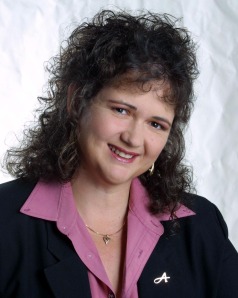
Q: First of all, major congratulations on Diamond Eyes winning the 2011 Hemming Award for Excellence in Science Fiction and Fantasy Themes. Since this is award is not necessarily awarded every year, winning must have come as a wonderful and welcome surprise. Did you consciously set out to explore the themes of race, gender, sexuality, class and disability in the book?

Actually, Diamond Eyes is a story about freedom and independence. But since my main character is a young woman who is blind, sexually inexperienced, and misdiagnosed by nursing staff who all treat her as crazy as well as handicapped, all those other themes grew organically in a way that also resonated strongly and unanimously with the judging panel.

Sad but true; while working for ten years in a mental health facility, I saw young men and women routinely castrated or medicated to suppress their sexual development, often without their knowledge or consent (due to the fact they’d been declared unfit to make such decisions on their own). So this part of Mira’s story is inspired by a young handicapped couple I met, who’d both been disabled through a contagious disease, but eventually regained their independence through modern medications and therapies – and when it came time that they’d recovered enough to have healthy children, it was too late. They’d both been “cared for” in their best interests.

Q: Following on from that, we were part of the QUT Cohort doing a Masters while writing a book. You produced Diamond Eyes. What was the research question you were exploring with this book?

Funny story: It started out as;

How can I crack the big markets overseas and for movies?

But since that was too big a question for a masters and required too many non-existent definitions about degrees of cracking, and how big is big etc, my lecturer dis-engorged the “choke” from my throat and encouraged me to narrow my focus to the more definitive;

How can a novel manuscript be ‘re-visioned’ to create a more satisfying draft.

(Where satisfying is defined by a self-assessed improvement that results in a commercial reward that had previously been unattainable.)

So the dissertation I wrote is called: Revisioning a “Novel Concept”: Beyond vision and revision to advanced editing strategies.

But since a lot of the research is drawn from the film industry, and from mega-best-selling works from overseas, and since a lot of the advanced editing strategies are topics that are never normally discussed in most writing workshops, it might as well be called;

Tips on how to crack the big markets overseas and for movies.

Sound familiar? Hehe.

David Meshow the theme for Diamond Eyes.

Q: You have a wonderful book trailer (LOL, my husband did it). The music is by David Meshow. Recently, we were on a panel together where you walked us through the process of finding the musician, approaching him and what has happened since. I’m sure people would find this fascinating, as it’s an example of cross-pollination between creative people.

Wow, yes! We’ve chalked up more views than a lot of big budget Hollywood movies and over 300 Youtube Awards in 17 countries, including;

#1 Most Discussed, worldwide in Feb & March

#2 Top Favourited, worldwide in Feb & March

#2 Top Rated, worldwide in Feb and March

Normally, I thrive in silence while I’m writing and editing, but at all moments in between I refill my creative energies by filling my home, my car – even my saddlebags with music.

Three of my characters love music, and play instruments, so I spent a lot of time on youtube looking for talented amateurs with the same kind of interests. People who could not only play, but play so well, they make it look easy by playing with a relaxed sense of humour. I also looked for people who could play with their eyes closed and invent their own tunes on a wide range of instruments, and that’s how I came across David Meshow – who can do all of that, and resembles Mira’s bodyguard in looks and personality. Best of all, he taught me out how to play electrical instruments outside, around a campfire – so I could make a scene work properly in the sequel Hindsight.

Then after being inspired for so long by David’s music, and his advice during my research stages, I wrote to ask permission to use one of his original instrumental pieces for the book trailer during the launch, because that piece has brilliant moments of violin and xylophone along with all the other instruments that gave it a unique offbeat quality which also dramatically suits the chase scenes at the end of Diamond Eyes, the novel.

But when I mentioned the novel and what it was about, he was so inspired by the unique concept behind Mira’s eyes that he offered to write a piece to suit her specifically.

And that’s what the Original Theme to Diamond Eyes is. Close your eyes, and you can image yourself blind. Open them again and imagine the world around you isn’t today. It looks how things did a century ago, even though you can still feel all the invisible *real* things around you – so if the three story building you’re in wasn’t there back then, well, now you’re standing in mid-air, looking down on the world. Living in two worlds at once. That’s the core idea, and David’s really nailed it with the official theme song. He’s got millions of fans now, but they all seem to agree. Diamond Eyes is the best yet, and I have to agree. But then, I’m biased! Hehe.

Q: I understand there are two more books in the Diamond Eyes series, Leopard Dreaming and Hindsight.  When is the last book of the trilogy due out? And what will you do after this?

Interesting question, because it’s not a traditional trilogy. Diamond Eyes is a stand-alone story set in an asylum, Serenity, which is on a sub-tropical island in Queensland.

Then the duet of sequels; Hindsight (just launched) and Leopard Dreaming (June 2012), are both set on the mainland, during a brand new stage of her life. They’re also much faster paced than Diamond Eyes.

If you liken them to movies in the film industry, then Diamond Eyes would be the pilot, and the next two would be the mini series. So you don’t necessarily need to read Diamond Eyes to enjoy Hindsight, but you’ll definitely need to read Hindsight before taking on Leopard Dreaming in the new year.


Q: In a post on the ROR site you say … ‘SF is not dead – from my perspective it’s morphing/maturing beyond the “pure” genre of science fiction into speculative fiction (the new meaning for SF[1][1]), in a way which offers room for a natural blend of genres which must also complement each other uniquely for each story. Effectively, this permits a wider scope for wider technologies and invites more possibilities and opportunities to cross-dress our genres.’ You go on to say …’ In our own fast-changing world, which is already rife with “fantastic” opportunities and “tomorrow technologies” is it any wonder that such elements are so readily accepted in the environment of a wider story – often even expected – by a market that can still shy away from health food if we label it health food? To many people, it seems that science fiction sounds more like “homework” while fantasy sounds like a “holiday”, and yet how many wouldn’t go anywhere on holiday without their mobile phone, ipod or laptop?’  I love this quote. How near future is the Diamond Eyes series? Would people feel at home in this world?

It’s tomorrow fiction, akin to James Bond, but nowadays, most genres need to be tomorrow fiction to some degree during the writing stages anyway, or else the technology can date the story too quickly and make it seem old fashioned too soon.

e.g.

So I’m constantly inventing new technologies based on my best guesses from existing products and research, and very often those “fantastic” new gizmos are hitting the market by the time the book is.

Off the top of my head, technologies that I invented for my stories in the last ten years, only to have them invented for real by the time the books launched, include;

  • Electronic pens, which convert any sketches into a text file or digital image.
  • Night Owls, a form of high tech night vision goggles which can also see through buildings using sound waves akin to mobile phone transmissions. Now also used in airports for full body scans.
  • NOR:STAN, the National Orbital Reconnaissance: See Through Anything Network. Same principle as nights owls, but also incorporating technology from the mining industry as a larger scale satellite system to help find lost bushwalkers, people trapped in burning buildings, and even terrorists in underground bunkers.

Even Mira’s Hue-dunnits – her electronic sunglasses which can change colour – are now in development as a fashion accessory to suit any wardrobe.

Q: You write in many genres under a number of pen-names, including a set of best-selling non-fiction titles, award winning adventures for children and even wickedly funny romance for women. You’ve always been a writer of exciting stories. What was the first thing you wrote seriously to submit?

A cosy crime story, called Budgie Soup, which was published in 5 countries, including the USA’s prestigious Murderous Intent Mystery Magazine, and won the Penguin Award, as part of the Scarlet Stiletto Awards, way back last millennium, in 1999.

Q: You say if you hadn’t been a writer you’d be …’ A cartoonist, vet or research scientist. And as it turns out, writing allows me to do bits of each!’ I can relate to research scientist. I think writers have to have enquiring minds. But cartoonist and vet? Why these two? Are you good at drawing and can you ‘talk to animals’?

Hehe… something like that.

To be a vet, we need to be astute at understanding body language – which works for characters as much as for animals. Pets can’t tell us where they’re hurting, and often characters can’t either. How we treat animals also helps to define us, not only as individuals, but also as a society.

Same goes with cartooning. It’s a social science that’s heavily dependent on observation of the human condition, as individuals, and in society, and how we perceive ourselves through the lens of humour also helps to define us.

To be a vet, we need great compassion, but humour is more often a dark art that can throw masks over fury, injustice and tragedy.

Q: You seem very comfortable writing a fast paced action thriller and moving across genres. A good book is a good book, no matter what the genre. Do you have any advice for writers to help them improve the pacing of their books?

Short sentences. Listen to men speaking, and compare to women on the same subject. Guys rarely use more than 8 words in a sentence at a time unless they’re explaining something, while women rarely use more than 12.

In action scenes, guys tend to get serious with only 2 to 6 words at a time, while women often clip down to 8 or less.

If you think that’s an exaggeration, watch all your favourite movies with the sound muted and subtitles on – and take notice how clipped conversations can get as the images speed up. Or take a ride on a train or bus with your ipod switched off so you’re listening to other people around you.

Q: You had a friend who attempted suicide when you were younger. You said …  ‘From the time we were both 10, we both had to ‘be mum,’ looking after our other brothers and sisters before and after school, and I had to manage my parents’ farm as well when they went away on business. On top of this we went to a high school where extreme pressure existed to be the best we could be. Students came from all over the world because of their high standards and we had to compete against them, too. My friend passed the breaking point.’ Are you tempted to write something that would reach out to teens who feel overwhelmed?

Yes, but not for a while. I can’t write really dark material unless I’m detached from tragedy myself and that’s definitely not this year. Otherwise, writing dark material only tends to take me down further, and once those chemicals in the brain start triggering the downward spiral, it’s a hard cycle to break free from again. And I’d never write that sort of thing without an uplifting ending, because it was soul-destroying misery-lit with downers for endings that drove my friend over the edge all those years ago. Don’t get me wrong, I love a good book that leaves me weepy, but if they’re not tears of hope, love or joy – if they leave me feeling empty and emotionally wretched – I’d never go anywhere near it. If I want to be depressed, I’ll read a newspaper.

Q: I was prompted to start this series of interviews because there seems to be a perception in the US and the UK that fantasy is a bit of a boy’s club. Do you think there’s a difference in the way males and females write fantasy?

Historically yes. Absolutely. But I’d like to think the last 10 years has become a bit more like this:


There’s been plenty of times when I’ve been told by readers that I must have had some of my stories written by my husband. Apparently, I’m not supposed to know how to field strip a Styr or Glock and put it back together again without it blowing up in my face. Or how to turn a gum tree into a signal tower, use scorpions and black light to navigate an underground tunnel, or the horns of the moon to tell north from south in either hemisphere.

At the other end of the scale, I know a subset of male writers who can really get inside a woman’s head well enough to write convincing female characters – but a lot more who can’t.

Q: Following on from that, does the gender of the writer change your expectations when you pick up their book?

Depends on the name they choose to put on the front cover, especially if it’s very feminine or hyper-masculine.

e.g.  Stephan King was always going to rule the page once he nailed his genre, and Karen Slaughter was never going to write little kiddies faerie tales.

Then there’s androgynous names, like AA Bell, Sonny Whitelaw, JR Ward etc, where the writing style is far more likely to appeal to both genres. Or at least try to, more often than not.

Q: And here’s the fun question. If you could book a trip on a time machine, where and when would you go, and why?

Ah, but if I told you, I’d create a paradox and a full set of alternative futures in another dimension. Just thinking about it is enough to split the future in two; one in which I do, and one in which I don’t.

Cool timing; there’s a new scientific theory (evolved from string theory, which in turn evolved from studies of nuclear explosions) that our present and past have already been shaped by our future in all its permutations in all dimensions. And that many things about Fate seem inevitable, because they’ve already been tampered with by those who’ve already travelled.

So assuming I’m one of them, and have already made the trip – or “will have going to have made it” at some time in the future (or alternate time line) – you can rest assured that all my friends will have nice things happen to them, while all those who’ve been nasty should be grateful I don’t hold grudges… much.

<insert evil laughter>

Give-away Question:

It’s said that everyone has something they’re naturally or uncannily good at – so good, you might call it a super power. Mira’s gift is seeing the past, her stalker can hear the future, while my own superpowers are merely green lights in heavy traffic and finding the perfect parking space when I most need it. (touch wood!)

So what’s your super power?


Catch up with Anita on Facebook

on GoodReads: www.goodreads.com/aabell
44 Comments

Filed under Australian Writers, Awards, Book Giveaway, Book trailers, Children's Books, Collaboration, creativity, Dark Urban Fantasy, Fantasy books, Female Fantasy Authors, Gender Issues, Genre, Inspiring Art, Music and Writers, Nourish the Writer, Paranormal_Crime, Promoting Friend's Books, Script Writing, Thrillers and Crime, Thrillers and Mysteries, Tips for Developing Writers, Writers Working Across Mediums, Writing craft, Young Adult Books

Meet Kim Falconer …

As the next of my series featuring fantastic female fantasy authors (see disclaimer) I’ve invited the talented Kim Falconer to drop by.

Watch out for the give-away question at the end of the interview.

Thank you, Rowena, for inviting me here to chat. What a wonderful idea, fantastic female fantasy authors!

Q: In a post on Nicole Murphy’s blog, you talk about having a dream and realising your potential. Your dream was to be published. You list a series of questions starting with – Why do I want to be published? That culminated in the realisation that you wanted to ‘be of value’. This was a dream exercise from Jeanette Maw, the @goodvibecoach. Do you use exercises like this in your everyday life to understand what is motivating you?

Absolutely! I live by the old Delphi motto, (recently cited by the Oracle in The Matrix) Know Thyself. These are the two magic words for living an authentic life.

We always have a choice to either live by our ‘default’ – the cultural conditioning, expectations and assumptions – or to take time to really know our genuine core values (which may be wildly different than our cultures). Like writing a character in a book, when we know the motivation, we know what’s driving the action and when we know what’s driving the action, we know the destiny. At that point we can ask, is this what I want? If not, we can change course. We all have the power to be who we are and it begins always with know thyself.

Q: Your first trilogy, Quantum Enchantment, you splice DNA and travel between parallel worlds. It seems to be a mix of SF and fantasy. And your second trilogy, Quantum Encryption, picks up the threads again. With such complex story lines and time lines do you have a huge flow chart to keep track of everyone?

Much of my creation process takes place in my head but I do keep a little booklet for each series with pertinent data like my character’s sun signs and other relevant astrology, their histories (which may not appear in the book itself) and places, familiars, memories, dreams, appearance, and, most importantly, time lines. When you write time unfolding in both directions, it pays to keep a close watch on it or things can get away!

I ran into a bit of trouble in Arrows of Time, book #2 in the Quantum Enchantment series. For starters I found the English language lacked the words to express the meaning of symmetrical time (time flowing in both directions simultaneously). In a way Arrows was my answer to the hard problem of time at the ‘quantum’ level. It does go both ways and this books shows us what that might be like to live out.

You could say there was a flow chart for Arrows. For twelve months a whole sliding glass door next to my study was covered in it. Wild!

Q: In an interview on The Fringe you say: ‘People don’t realise writing is as challenging and complex as brain surgery. You have to work on the cadavers first, learn all the anatomy and physiology and bio-chem of prose and storytelling before you cut a live one! It takes practice. I mean, nonfiction is objective, intellectual but fiction asks for more. It asks for your whole heart.’ Writing from the heart, do you find yourself exploring similar themes in your books?

The themes in my books are multilayered. There is an adventure component which simply invites the reader to immerse and come along for the ride. There is also an intention to expand my readers’ consciousness through the experiences and conflicts they encounter. Some of the philosophies are heady, I am told. But the true essence of the books is the heart. Everything from the heart. I came from a nonfiction and academic publishing background and the whole enchantment for me in writing novels is to get out of my head and into my heart!

Q: You have your own astrology page, Falcon Astrology. You say astrology has always been a part of your life as your father used to ‘use horoscopes in conjunction with financial adventure and business management’. Your interest in astrology has taken a different path. You say you are interested in ‘ancient wisdom, mythology with mystical traditions, art and poetry’ and are ‘ever seeking the hidden worlds of the inner self’. I read somewhere that the constant connection to the internet (people in offices dipping into social networks on and off all day, people constantly using their phones to keep up with social networks), has led people away from connecting with their inner-selves. They live on the surface, never delving deep. This person recommended turning off all electrical devices for a weekend, every now and then, just to take the time to be in the present. Do you do this?

This is a good question. I don’t think superficiality and the internet are synonymous. I’m actually doing the Deepak Chopra Centre’s 21 day meditation challenge, and that of course, is online. It’s amazing. The meditations are wonderful and just knowing you are participating with hundreds of thousands of other mediators makes is quite a powerful collective exercise.

People will be connected or disconnected regardless of whether they have the internet or not. It’s a tool. It only matters how we use it.

For me, I’ve researched and written 7 books in four years and that’s pretty much an everyday dedication – me, a quiet room, my word processor, the internet. I do take time out daily to meditate, run on the beach, walk in nature, work on my rooftop garden  and be with friends, familiars and family. It’s all about creating balance, at least in my case (I can be a real workaholic!)

Q: In an interview on Beauty and Lace, while talking about growing up in the 60s and 70s you said: ‘I had to outgrow my cultural conditioning and adopt less biased beliefs to feel fully empowered. Having my son at age 29 was a huge turning point. When you have the creative force of Mother Earth flowing through you, it’s hard to feel like an underdog. Seriously enlightening transformation!

Currently being female brings to mind the Strength card in the deck of Tarot. Do you know the one? A woman is depicted with a lion, Ishtar’s beast. It’s an image of power and seduction, wisdom and instinct. I think that sums things up nicely.

Being a woman has also given me quite an edge writing these last six books. There are issues of gender that ring all the more true because they are written from direct experience.’ I notice you have strong female characters in ‘Journey by Night’. Was this something you set out to explore or did it just evolve as you wrote the book?

Journey by Night is the sixth and final book in the series and tells the story of Kreshkali and Nell, characters introduced in the very first book. Because of the incredible fortitude and strength of these two women already established, telling their story involved showing how they go that way, how they became the people readers know them to be. Already I have reports of a lot of tears and ah ha moments as some of those reasons behind their quirks, strengths, fears and magical inclinations are revealed. Very satisfying to read and write.

Did I plan them to be strong from the beginning? You bet!

I don’t know many women who really enjoy reading about victims that never find the wherewithal to beat their odds, at least, I don’t! My women are heroic, both vulnerable and hardened, smart and streetwise, loving and imaginative. . . you know. Women!

Q: The list of all the things you’ve studied is fascinating. ‘Alternative health, Jungian Psychology, art history, quantum physics theory, metaphysical philosophy, self-sufficiency farming, marine biology, veterinary nursing, dressage, animal husbandry, SCUBA diving, and nursing mothers counseling. I hold diplomas in herbal medicine, nutrition, vet nursing, farrier science, literature and am a board certified lactation consultant. I’ve also studied yoga, music (banjo, mandolin, guitar), mythology, tarot and of course, astrology’. You’ve been studying Iaido for seven years. I did five years Iaido. I loved it for the beauty of the movements and the philosophy behind it. Have you done other martial arts? (I also love yoga!).

I love that you found Iaido relaxing. I can see how, once the incredible awkwardness of the samurai sword is a little under control, it can be that way. But I had true warrior woman sensei and she was anything but relaxing! Having said that, my worlds, she was good and what I learned went well beyond the mechanics of the practice. Like you said, the philosophy and the heart of the sword -  so empowering and beautiful. I’ve done Aikido, Hop Kido, yoga, chi kung and archery. All very beautiful and centring disciplines. It’s the sword work that has supported my writing the most. I took it up so I could write authentic fight scenes!

Q: That’s a cool ‘time portal’ on the front page of your web page. Do you have a background in graphic design? (Reading on I discovered your son is an artist).

KimFalconer.com is a collaboration with my son. He’s the animator and graphic artist. I am the coder. I learned all the html/CSS in a  socio-technology degree through Open University Australia (another point for the internet – the course was offered at Curtin University on the other side of the continent!) I love web design. Having such a fabulous artist is a wonderful bonus!

John Waterhouse - The Siren

Q: John Waterhouse Painting, The Siren inspired your new trilogy Amassia.  It’s co-written with your cover artist/animator son, Aaron Briggs. (I love the Pre-Raphaelite artists and Waterhouse’s The Lady of Shalott is one of my all time favourites). I’ve discovered there are visual writers and aural writers. Aural writers like to play specific music while they write to get into the right frame of mind for each book. I’m guessing you are a visual writer?

Visual yes, but it’s more than that.

I’m really transcribing. The story plays out in front of my eyes. It’s like watching a film only I am fully immersed in all five senses. My only hope is that I can type fast enough to keep up with the action and the dialog!

I like silence and quietude. The more isolated I am, the more the inner world comes alive!

Q: I was prompted to start this series of interviews because there seems to be a perception in the US and the UK that fantasy is a bit of a boy’s club. Do you think there’s a difference in the way males and females write fantasy?


I would probably have to read a few thousand more books to answer that with any authority but with my experience, I can give you a firm, yes and no. Yes when we think of stories with first person protagonists like Charlaine Harris’ Sookie Stakchouse. A guy could write her (think of the men writing romance under pen names) but Charlaine’s perspective is very much a product of her society and very biased female. Just the way sookie stops to put on makeup (between vampire and were attacks), shave her legs and think about her sex life rings ‘female’. I don’t see Jim Butcher writing a woman that way. His Dresden, on the other hand, is American male. We see inside a man’s head, and it’s brilliant. (Same with China Mieville) In the case of these authors, you can feel the female vs. male style in the writing.

Then there are authors like David Eddings and Fiona McIntosh. They have both written fabulous fantasy tales and though there is a strong feeling of gender in the characters, you could swap author names and not know the difference in terms of being written by male or female.

As in any genre, the author brings themselves to the work and that means every book will be different, a unique expression which adds to the whole of the field.

Q: Following on from that, does the gender of the writer change your expectations when you pick up their book?

Ah, not until I begin to read. As I said above, sometimes the gender of the author seems relevant and sometimes not so much so. It depend a lot on the tense it’s written (first person and male by a male author gives us some hints right ways – we are in a guy’s head!). Stories that are more epic where the politics of the worlds drive the plot, the focus is off the characters, to some degree, and more on the stakes. With new authors, and familiar, I like to leave my expectations behind and let them surprise me.

Q: And here’s the fun question. If you could book a trip on a time machine, where and when would you go, and why?

That’s easy. I would go back to 575 BCE to ancient Mesopotamia and stand in front of the Ishtar Gate of Babylon. To walk into that city under the Ishtar Lions and visit the hanging gardens would be a trip of a thousand life times!

 Give-away Question:

If you were a young witch (male or female) training at Treeon Temple and about to meet your familiar – a creature you would be bonded with for life, in constant communion with and able at times to ‘trade places’ with, what would that creature be?


Follow Kim on Twitter:  @KimFalconer

Catch up with Kim on Facebook.

See Kim’s Daily Astro Flash here.

Subscribe to Kim’s New Moon News Letter.

56 Comments

Filed under Australian Writers, Book Giveaway, Characterisation, creativity, Fantasy books, Female Fantasy Authors, Gender Issues, Inspiring Art, Nourish the Writer, SF Books, Writing craft

Meet Kylie Griffin …

As the next of my series featuring fantastic female fantasy authors (see disclaimer) I’ve invited the talented Kylie Griffin to drop by.

Kylie has her first book due out in 2012. I thought it might be interesting for readers to hear from a writer who is at this point in their career.

Q: First let me say congratulations. You must have been over the moon when you go the Call with the offer of a contract! Your first book Vengeance Born is due out from Berkley in February 2012, with two more in The Light Blade series already contracted. Have you been working on this series for a long time?

Hi, Rowena, thanks for inviting me and for the congratulations. I was over the moon getting the Call (and the three-book deal just thrilled me). You work so hard that when it happens there’s a real sense of disbelief that you’ve finally achieved that goal, then you run the gamut of emotions, from elation to relief and happy-crying, LOL.

To answer your question, I wouldn’t say I’ve been working on the Light Blade series all that long but I do think the foundation for writing a fantasy romance series has been building over many years.

I’m an avid fantasy reader from way back – Anne McCaffrey, Andre Norton, Mercedes Lackey, David Eddings, Isobelle Carmody and their books (and your T’En series), just to name a few. All of their books had a huge impact on me growing up – and I wanted to write fantasy but with a romance interwoven through the story. I love putting a hero and heroine together and watching their story unfold, usually helped along by an epic-style external plot.

VENGEANCE BORN started out as a stand-alone book in 2007 with all the elements I love about fantasy – world-building, empires and wars, other races – demons, human warriors, hybrids, a goddess – but there’s also the story of the main character’s romance. Then, as I wrote, some of the secondary characters began demanding that I write their stories.

While I’ve a three-book contract there’s another four characters clamoring for attention. Whether they’ll be written remains to be seen. :-) I hope readers will get the chance to meet them.

Q: In your day job you are a teacher, but your passion is writing, specifically fantasy-romance. There are a lot of paranormal-romance on the shelves now days, but not so many fantasy-romance. For readers who don’t know the genre, how would you describe it?

I like to think of fantasy romance as being a combination of traditional fantasy and traditional romance.

You get all the fantasy elements, as in a cast of characters, plot archetypes, world-building, magic, etc. yet with the additional element of a romance thrown into the mix, and you end up exploring the gamut of relationships – political, social and romantic.

I love the appeal of having the best of all worlds in my stories (no pun intended *grin*).

Q: That leads to – what drew you to write in this genre and its associated sub genres?

My heart belongs to the genre – specifically fantasy romance, science fiction romance and post-apocalyptic romance – I love, live and breathe it. I can’t remember a time I wasn’t fascinated by it.

My earliest exposure to this genre was as an impressionable 6y.o. watching a rather scary episode of Dr.Who (a British SF TV series), being terrified but at the same time fascinated by the whole concept of time-lords and travelling to different worlds with varying technologies etc.

I also grew up devouring every book, TV show and movie in this genre – Star Wars, Star Trek, The Hobbit, the Dragons of Pern series, the Witch World series etc. Writing my own stories seemed just a natural extension.

The pure escapism of writing about characters who exist in an imaginary world, the vast scope of story lines, the human to non-human range of characters, the development of a romance and the challenge of making everything so real as to suspend a reader’s disbelief. I just love it!

Q: You are known as the Contest Queen because you have placed and won so many Romance Writers competitions. (Kylie is a member of RWAustralia, RWNZ and RWAmerica). You won the RWAmerica Golden Heart (Paranormal section), the Emma Darcy, the Valerie Parv, the Clendon, the Emily and have placed man times in the RWAust Emerald Award. I know how advantageous it is to an aspiring writer to join these organisations and to enter these awards, but the readers might not. Would you like to explain how placing and winning awards helps a writer’s career?

This is a great question, Rowena. You’d think the purpose of entering a contest would be to win, and for some writers this might be valid. When I first started entering contests, I didn’t have a writing group or a critique partner service to draw on for feedback, so this was a way of meeting that need and improving on my skills as a writer.

These days many writing organisations have other services like critique partner schemes, isolated writer programs or writing groups. So it’s one of many ways, not just the only way, to receive feedback.

A lot of the larger publishing houses these days don’t take unsolicited manuscripts ie. you need an agent to represent you to get editors to look at your work. The houses I were aiming for – Berkley, St.Martins, EOS, Harlequin LUNA, Grand Central Publishing – no longer accepted unagented submissions.

So, another strategy I employed was to look at the final judge of the contest. It’s usually either an editor or agent who acquires/represents the genre you’re writing in. Reaching the final round or placing in contests gets your work in front of these specific editors and agents. You can bypass what’s affectionately known as the “slushpile” or the “no unsolicited submissions” rule.

Another reason for entering and aiming to place in contests is that it builds your contest resume and gets your name “out there”. Including this this contest success list in your query letters to agents and editors or when pitching in person to them can make your work stand out. It can also show that your work has consistency and that it also had a potential readership.

Q: By day you are a mild mannered school teacher but your alter-ego is a Rural Fire Fighter, State Emergency volunteer and Community First Responder (responds to 000 calls). You must be drawn towards helping people in dangerous situations. Could you tell us about some of the experiences you’ve had?

I find a lot of satisfaction in helping people, that’s true.

I’ve spent most of my teaching career in small, isolated rural areas and getting to know the people and families in these villages and surrounding farmlands is something that evolves. There’s a huge sense of mateship or looking out for one another because you have to and you know one day you may need their help too.

Also, from a more pragmatic point of view, there tends to be a lack of emergency services (or swift access to them), so that need to help one another tends to be a way of life in these communities but in this day and age that means volunteering and gaining qualifications and along the way you make some great friends, not to mention learn skills you may never have experienced had your life taken a different path.

Some emergencies do hold an element of danger but that’s something our training helps us to prepare for and deal with. In the Rural Fire Service I’ve been to everything from bushfires (some deliberately lit, others started by lightning strikes) to house fires. On the scare factor scale, being a fire-fighter is probably the most immediately dangerous occupation of all the services I’m involved in.

I’ve been a member of the State Emergency Service for 15 years and in that time have participated in several searches for missing people and gone away on out of area calls as a part of a flood and storm damage crew (tarping houses, removing trees, evacuating people from their houses during floods), eg.most recently Cyclone Yasi and the devastating floods in Queensland. Because of our geographic isolation, our unit also responds to road crashes and I’ve helped extricate people trapped in vehicles and, unfortunately, I’ve also assisted with body retrieval when the casualty has died.

I’m also one of five SES members who’ve trained with the New South Wales Ambulance Service as a Community First Responder – an advanced first aider (similar training a junior ambulance office receives). We have a vehicle outfitted with almost everything you see in an ambulance. Over the last few years I’ve attended numerous emergency call outs, everything from broken limbs, heart problems, asthma attacks, amputations, severe burns, to performing CPR on casualties.

Not every emergency situation has ended well but I get a huge amount of satisfaction knowing my team mates and I are able to provide help when it’s needed. Our community appreciates it too. A couple of examples, one of the local oldies bakes us cakes and other goodies when we’re on 24hr flood duty, a passing motorist we helped free from floodwater sent us a large box of chocolates and a wonderful thank you card, and a family whose house we saved from burning down made a lovely donation to the fire unit.

Q: I was prompted to start this series of interviews because there seems to be a perception in the US and the UK that fantasy is a bit of a boys club. Do you think there’s a difference in the way males and females write fantasy?

The 'Front door Dragon' that Kylie commissioned a local stained glass artist to make for her.

Personally, I’m saddened to think that there is this sort of perception out there. We have such a rich diversity of authors, male and female, who love writing in this genre and each bring their own unique styles and stories to our bookshelves.

Even if there is a difference in the way male and female fantasy authors write, isn’t the sole purpose of writing to entertain the reader (and ourselves)? We all do it in different ways and it’s the diversity that feeds and entertains the reader.

As a fantasy author, this is the way I prefer to think of myself.

Q: Following on from that, does the gender of the writer change your expectations when you pick up their book?

I’m a huge believer that the story is paramount. I read the back cover blurb with the expectation of being sucked in – if it hooks me then I’ll read it regardless of the gender of the author.

As a reader I want to be engaged, I want to identify with the characters, I want adventure in whatever form it comes. I want to be entertained for a few hours. If the author’s writing does all this, then mission accomplished.

It’s as simple as that.

Q: And heres the fun question. If you could book a trip on a time machine, where and when would you go, and why?

Oh, the possibilities are endless. This is so not a fair question!!! LOL

I have a passion for ancient civilisations – the Romans, the Vikings, the Greeks, the Mayans, the Egyptians, the Celts – so anywhere/anywhen with them would be amazing.

I also like alternate histories. Exploring alternate turning points in the present would be fascinating, a bit like the Choose-Your Own-Adventure stories where you decide which pathways determine your present story line.

But I also love the unknown future – what will humanity be like in a hundred or a thousand years? What technology will we be using? Do we share this universe with any other race? So, going forward in time would be fun too!

Thanks for this opportunity to be interviewed, Rowena. It’s been a hoot and I’ve really enjoyed answering your questions.

Give-away Question:

Kylie says: While I haven’t received my author copies of VENGEANCE BORN, I do have a eco-friendly tote bag with the cover of my book on it to give-away.

I’ve shared a little bit about some of the fantasy authors who’ve have impacted me as a reader and writer. So, which books and fantasy world/s have made an impression on you and why?


Follow Kylie on Twitter: @KylieGriffin1

See Kylie Griffin’s Blog.

Follow Kylie on GoodReads.

Follow Kylie on Facebook.


40 Comments

Filed under Australian Writers, creativity, Female Fantasy Authors, Fun Stuff, Gender Issues, Movies & TV Shows, Nourish the Writer, Publishing Industry, The Writing Fraternity, Tips for Developing Writers, Writing craft

Meet Robin Hobb …

As the next of my series featuring fantastic female fantasy authors (see disclaimer) I’ve invited the talented and prolific Robin Hobb  to drop by.

Robin at Supanova with Cinderella

Q: It was great to meet you at Supanova. As a best-selling fantasy author you must get invited to a lot of conventions. How do you juggle writing to meet deadlines with the pressure to attend these events?

Truthfully?  Usually, I just say, “No, thank you, I’ve a deadline.”

This year, I didn’t.  I went to Supanova and absolutely loved it.  I havenever seen a pop culture festival that treats its professional guests so well and with such thoughtfulness. And then I went on, to Trolls&Legendes in Belgium, and Imaginales in Epinal, France and to Etonnants Voyageurs in France.  And I had a wonderful time and met many people, but now I’m behind on a deadline.  So.  I think I need to go back to saying “No, thank you” to most of the invitations, and staying home and getting the books written.

Q: You started out writing as Megan Lindholm and even though your Robin Hobb books are really popular, you’ve continued to write under your original name. Have you come across readers who only read Robin or Megan’s books?

Most definitely.  The two pseudonyms have vastly different writing styles and also differ in choice of subject matter.  So I’m now getting notes from people who enjoyed one and not the other, or seeing posts about it on-line. And such letters and posts very much validate my decision to write under two different names. Readers do want to know what they are riding into when they open a book. On the other hand, I also hear from readers who enjoy the contrast and have enjoyed both sets of stories.  My best experience was with my French translator, Arnaud Mousnier-Lompre.  He was delighted with the Lindholm stories and told me that it was like translating a completely different writer.

Q: With two names and numerous trilogies/series under each name, (Robin Hobb: The Farseer Trilogy, The Liveship Trilogy, The Tawny Man Trilogy, Soldier Son trilogy, The Rain Wild Chronicles. Megan Lindholm: The Ki and Vandien Quartest, Tillu and Kerlew, as well as stand alone books), how do you keep all the worlds, characters and narrative threads straight in your mind? Do you have a giant cork board with flow charts? Do you only work on one series at a time?

OH, do I have to admit this?  When I re-read some of my earlier work, it’s like someone else wrote it.  Often I encounter minor characters I’ve forgotten completely, or plot twists that I don’t recognize as my own. I think that one book just crowds out what has gone before.  When I’m writing on a long book, or series of books, as I am now, I do have glossaries of characters and place names and even timelines for books that run for years and years.

My greatest fear is that I will contradict myself on some key point.

Q: In an interview at Shades of Sentience when asked how you create such believable minor characters you said: I try to remember that no one is a minor character in his or her own life. I love this sentiment. It made me laugh when I read it. Do you find your characters take on a life of their own?

Inevitably. And sometime a minor character, such as the Fool, refuses to take a back seat but jumps up into a major position. Then there are lesser characters, such as Hands, who really had his life twisted by events so far outside his control that I still feel bad about his very last encounter with Fitz.  Not that I could have done anything to change it.  He reacted as he did because he is Hands, and that was how Hands would have reacted. And that is the best part of characters taking on a life of their own. In some ways they make the writing easier.  In others, when they insist on doing something that is contrary to the outline . . . well, that is when the writing gets very interesting.

Q: In an interview  on Pat’s Hot List you talk about how you start out with one intention for the book and by the time you’ve written it, the book has veered in a different direction. Can I take it from this you are more of a Pantser than a Plotter? (For non-writers Pantsers just sit down and write, while Plotters plan).

Definitely flying through Story by the seat of my pants, with only a glance or two at the instruments and charts from time to time.  I get to land in some very interesting places that way, and sometimes I’m in completely uncharted territory, and wondering just as much as the reader might about exactly where I am bound.

Q: We’re around the same age. In an interview you speak of reading Fritz Lieber and learning from the terrible things he did to his characters. (He was one of my great inspirations when I first discovered fantasy). How do you feel the genre has changed since the 70s?

Oh, my Fritz Leiber.  How I loved that man’s characters and writing, and still do.

Since the 70′s, I think Fantasy has changed by finally being allowed the page space we need to fully enjoy plot, setting and characters.  I am still amazed at the talent of those writers who conveyed such strange settings and unique characters within such a tight word restriction.

Nowadays, too, there are far fewer restrictions on what we can write in terms of sex scenes, gender identity, race, violence and, well any other former taboo you can think of. And that isn’t always good, at least in my opinion.  Just because you can shock or brutalize the reader and get it published doesn’t mean that you should.  But in the stories that require it, where it’s there for a reason, we suddenly get fantasy and SF with great emotional depth to it.

Q: I was prompted to start this series of interviews because there seems to be a perception in the US and the UK that fantasy is a bit of a boy’s club. Do you think there’s a difference in the way males and females write fantasy?

I think there’s a difference between any two writers who write fantasy or sf or romance or poetry, and that that difference is far greater than can ever be explained by gender. In my opinion, yes, there are differences between

male and female writers.  But the spectrum of sexuality is so broad that it’s impossible to make any generalized statement about it.  “Men write about sex and women write about romance.”  That’s the sort of thing I hear, and I think it’s just silly. Which men, what woman?

And I really don’t understand the idea that fantasy is dominated by writers of one sex or the other. If you look at the book racks, I’d almost say there are more women writers of fantasy right now than men.  I don’t think I’ve ever made the sex of the writer part of the criteria for choosing a book in any genre.  When I was a younger reader, I could seldom tell you the name of the author of a book I’d just read.  I didn’t care about the author, only the story.

Q: Following on from that, does the gender of the writer change your expectations when you pick up their book?

Oh, I think I accidentally already answered that!

If you look back through the history of our genre, you will see that yes, there were women who used men’s names or only initials as a way to conceal their gender. And at one time, doubtless it was harder for a woman to be published in SF.  But I think that barrier fell so long ago that it’s scarcely worth worrying about any more.

Now with that said, I’ll add that when I chose my pseudonym, Robin Hobb, I deliberately chose an androgynous name.  I knew I’d be writing at least the first three books from the first person view point of a young male, and so I chose to lower the threshold for ‘suspension of disbelief’ by using a name that left the gender of the writer in doubt.  But if I’d been writing a story told from the POV of an ultra-feminine woman, I’d probably have been tempted to choose a name that reflected that, as well.

I’d never want anyone to choose one of my books on the sole basis that I was female.  I’d feel really insulted if that was the only reason a reader picked up my book.

Q: And here’s the fun question. If you could book a trip on a time machine, where and when would you go, and why?

I’d go home.  I’d want to be dropped off in the late 60′s by the mailbox on Davis Road, in December about 8 at night, when the darkness in Fairbanks, Alaska is absolute.  I’d want to walk down the lane with the snow crunching and squeaking under my boots and the birches arched down over it with the weight of snow on their bare branches. I’d want to see the lights through the trees and then finally see that log house again.  And all my dogs would start barking and they come racing through the snow to challenge me. And then they’d recognize me, and I’d get hit in the chest with 120 pounds of malemute and I’d be with my best friends ever again.

Follow Robin on Twitter: @robinhobb

Follow Robin on GoodReads.

See an interview with Robin Hobb on You Tube.

9 Comments

Filed under Characterisation, Fantasy books, Female Fantasy Authors, Nourish the Writer, The Writing Fraternity, Writing craft

For the Goth Girl I met on the Train

Saw you reading Robin Hobb and we both looked quizzical at something the train driver said. So I said, Hi.

So glad I did.Turns out you’re doing Creative Writing at UQ.

I mentioned the Vision Writers Group. Here’s the link. And there’s a list of useful writing craft posts here.

Best of luck with your writing!


Leave a Comment

Filed under creativity, Writing craft, Writing Groups

Meet Gareth Powell …

I have been running a series of  interviews with female fantasy writers to redress a perception I came across – that fantasy was a bit of a boy’s club. It really isn’t like that here in Australia. We have many wonderful fantasy writers who just happen to be female.

Today I’m interviewing Gareth Powell because he has a wonderful new book out, and also I thought I’d ask him the same questions I’ve asked the female writers about fantasy writing and gender, to get his perspective as a male writer.


Q: (Disclosure here) We’re both published with Solaris Press. Your latest book, The Recollection, was launched in August. It’s been compared to Iain M Banks and Alastair Reynolds. From the blurb it seems to contain a mystery, parallel worlds/time travel and political intrigue. What themes are you exploring?

A: There’s a lot going on in The Recollection. The main characters are all—in one way or another—torn from the comfort of their everyday lives and thrust into dangerously unfamiliar territory. They have to fight to survive; they have to adapt and make decisions they didn’t know they were capable of making. At its heart, though, I think it’s the relationships between these characters—and the significance those relationships hold when measured against vast swathes of time and distance—that drive the book.

Q: I see you are an interviewer and reviewer of CDs for Acoustic Magazine. Did you study an instrument? Did you belong to a band when you were in your teens? Are you one of those writers who makes up a different play-list for each book and uses it to get into ‘the zone’?

A: Although I appreciate music, I can’t lay claim to any inherent musical talent. As the old saying goes, I couldn’t carry a tune in a bucket. Nonetheless, I do find that music plays an important role in the writing process, and I often listen to orchestral or instrumental music while working. The music screens out external distractions, and it helps with the rhythm of the sentences. While writing The Recollection, I listened to a lot of film soundtracks, especially the iconic Blade Runner soundtrack by Vangelis, and Clint Mansell’s haunting score for Moon.

Q:  You are also a prolific writer of short stories. (For a review of Gareth’s short stories see here).  You have a collection, The Last Reef.  Writing short stories is an art, especially with SF and F, when the writer has to set up the world as well as tell the story in less than five thousand words. Your short story Ack-Ack Macaque (try saying that fast five times!) won the Interzone Readers’ Poll for best short story in 2007.  Do you find the urge to write short stories interrupts the flow of your novel writing?

A: Short stories don’t so much interrupt the flow of my novel writing as plug the gaps between novels. They make a good playground within which to test new ideas and concepts; and their length makes them a refreshing change of pace after the long haul of a novel.

Q: Your previous title, Silver Sands, appears to be an SF mystery. The world sounds quite noir – ‘a world of political intrigue, espionage and subterfuge; a world of retired cops, digital ghosts and corporate assassins’. Are you a film noir fan?

A: I have long been a fan of films such as The Maltese Falcon and LA Confidential, and have dipped into the world of the hardboiled detective through short stories and novels by Raymond Chandler and the like. However, I think I owe my real love of “noir” to the “tech-noir” look and feel of films such as Blade Runner, The Terminator, and Aliens; and the literary worlds explored by the Cyberpunks in the late 1980s—especially William Gibson’s “Sprawl” series of novels and short stories, including Burning Chrome and Neuromancer.

Q: I see you work as a PR manager for a disabled children’s charity. What a wonderful job, to be able to do something really worthwhile! My aunt has lost three children to Cystic Fibrosis so we’ve lived with the routine of constantly treating and medicating a child. Did personal experience lead you to apply for this job?

A: The charity I work for offers specialist play sessions to babies and pre-school children with disabilities and additional complex needs. I came onboard because I had experience in marketing and PR, and they desperately needed someone to boost their visibility, in order to attract donations. I work for them two days per week, and my job is to get them in the local paper as often as possible.

After a decade spent in corporate software marketing, it feels good to be doing something that has a clear and immediate benefit. I know that the money I raise through my efforts goes to support local children and families who really need it.

Q: I was prompted to start this series of interviews because there seems to be a perception in the US and the UK that fantasy is a bit of a boy’s club. Do you think there’s a difference in the way males and females write fantasy?

A: A few years ago, Aliette de Bodard and I collaborated on a ten thousand word novelette  for Shine, an anthology of optimistic science fiction from Solaris Books. We had a lot of fun writing it, but I can’t say I noticed any difference in our approaches. We were just two writers doing what we enjoyed doing.

Based on that experience—and on conversations with many other female authors—I don’t believe that there is a difference in the way that men and women approach the craft of writing genre fiction. If there is a difference between the sexes, it’s in the reception their writing receives. The latest figures I’ve seen seem to indicate that men and women are fairly evenly represented when it comes to the number of authors currently writing genre fiction; however, the male writers seem to get more reviews and more exposure than the females, which is obviously grossly unfair—especially in genre that prides itself on its open-mindedness—and the probable root of the false perception mentioned in your question: that fantasy is a boy’s club.

Q: Following on from that, does the gender of the writer change your expectations when you pick up their book?

A: There may be many reasons for me to pick up a book, but none of them involve the sex or gender of the author.

Q: And here’s the fun question. If you could book a trip on a time machine, where and when would you go, and why?

A: Firstly, I’d go back to the late 1980s and spend the day with my father. He died when I was eighteen, and I never really got the chance to know him as an adult. Now I’m a father myself, I think we’d have a lot to talk about.

After that, I’d probably go further back. I quite fancy seeing Ancient Egypt and Ancient Greece in all their splendour. En route, I might stop for cocktails in New York in the 1920s, before the Wall Street Crash.

After that, I’d skip ahead a few centuries, then jump right to the end of the universe, to find out what happens—like flicking to the back page of a book, just to see how the story turns out.


Catch up with Gareth on Facebook.

Catch up with Gareth on GoodReads.

Catch up with Gareth on Google+.

See Gareth’s articles here.

Follow Gareth on Twitter. @garethlpowell

1 Comment

Filed under SF Books, Writing craft